Editorial and photo essay
In Hawaii, innovation is transforming fish farming
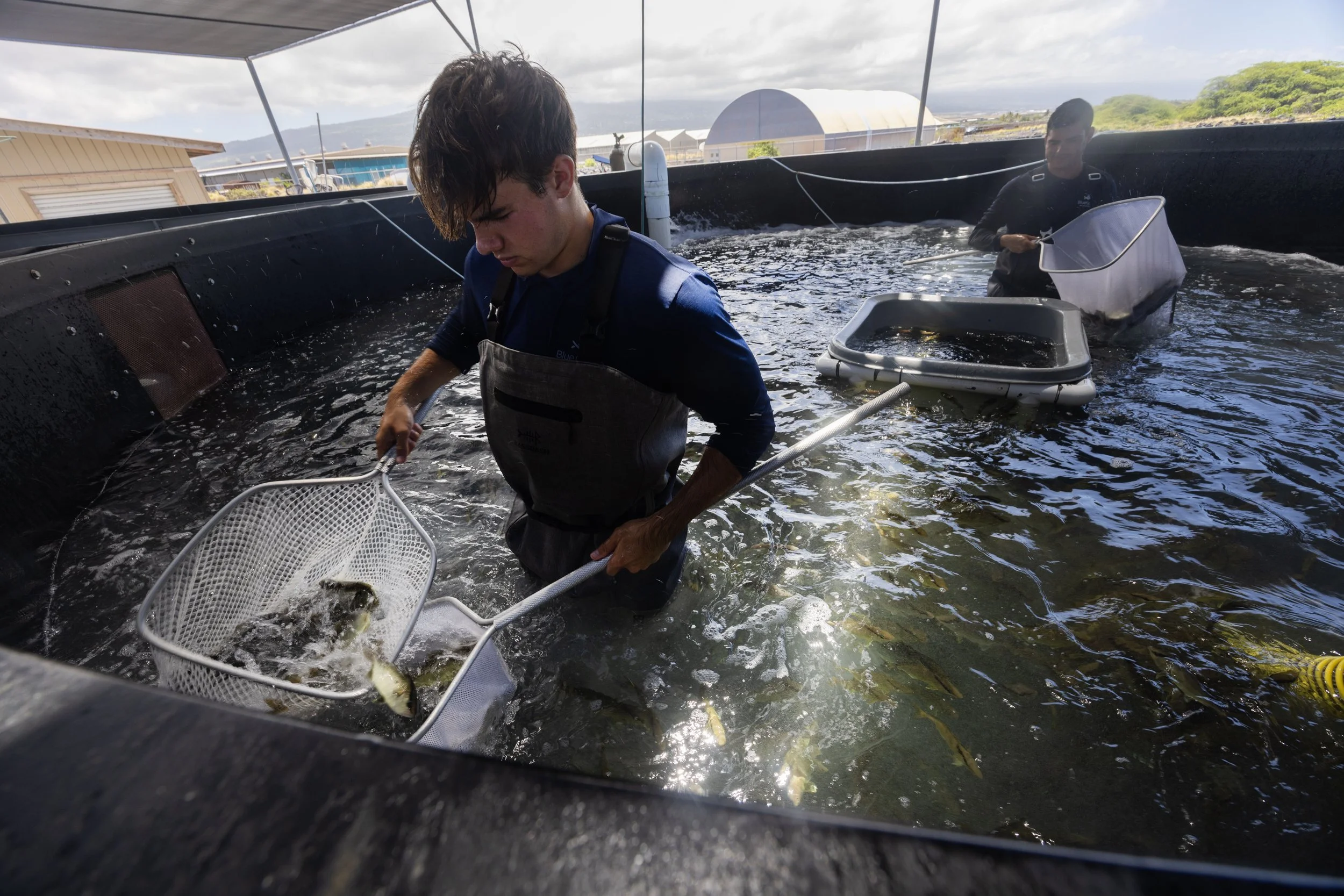
At Hawaii Calls restaurant, father-and-son chefs Jayson and Ocean Kanekoa take pride in procuring food from local farms on Hawaii’s Big Island — the Hamakua mushrooms, salad greens and of course, pork and pineapple for Hawaiian pizza. And today, the farm-to-table meal features locally farmed fish, too — Hawaiian Kanpachi, or longfin yellowtail, a fish native to the islands that is responsibly raised on an innovative fish farm just a quarter mile offshore, in the clear, calm waters off Hawaii’s Kona coast.
“These days it’s so uncertain with getting fish,” Jayson Kanekoa explains. “But I know I can always lean on the farm to get Kanpachi. It’s there for me all year round.”
More than 90% of all fish consumed in the U.S. is imported, and half of those imports are farmed, mostly in countries that lack strong environmental protections. In Hawaii, chefs like the Kanekoas, alongside farmers, scientists and entrepreneurs, are showing what’s possible when traditional aquaculture knowledge meets modern technology: a new, sustainable source of seafood, made in the U.S.A.
Ecuador's crabbers and the muddy work of saving mangroves
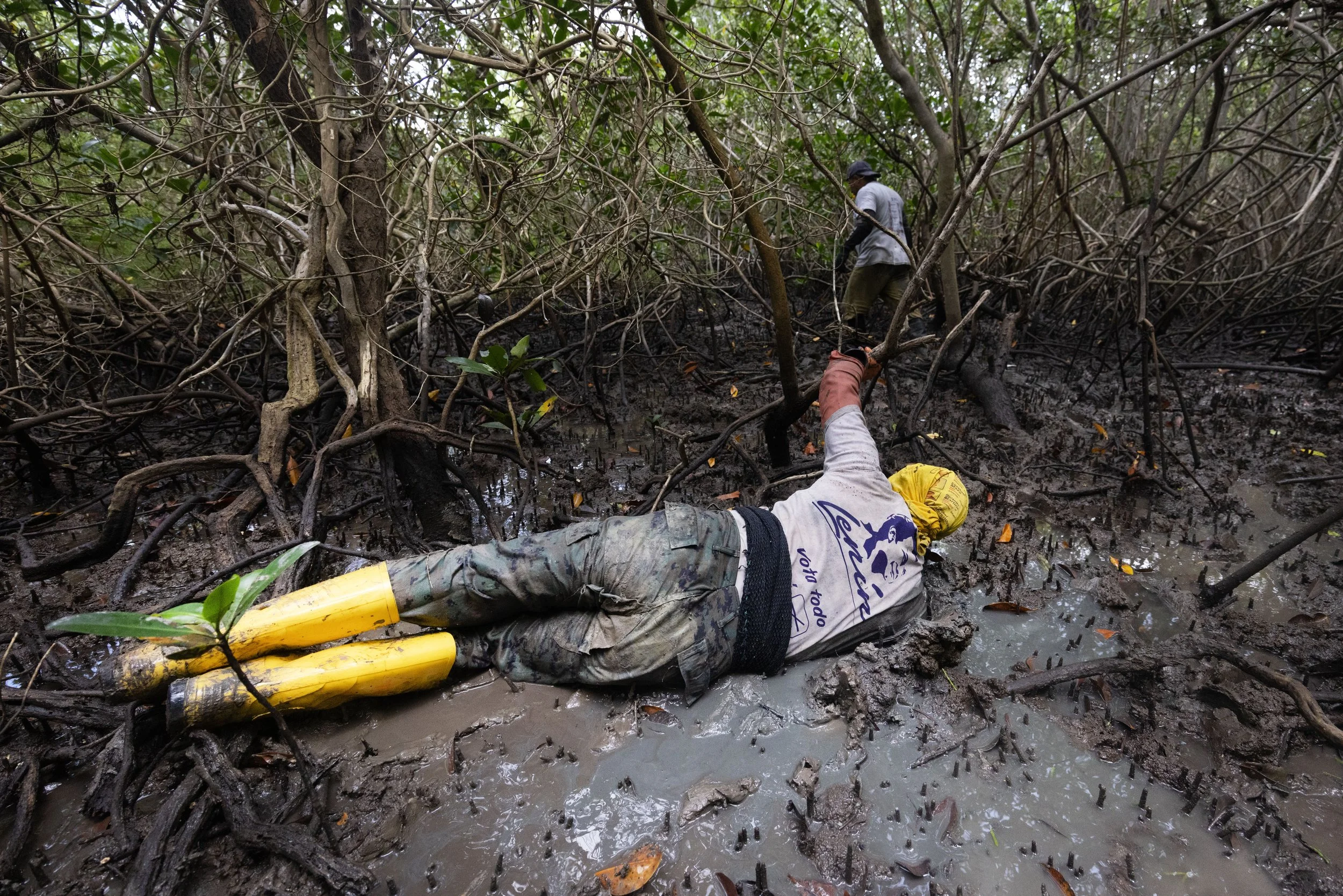
José Ordinola and Mauricio Cruz wade waist-deep into a small channel that flows from the Gulf of Guayaquil into the Arenillas Ecological Reserve mangrove swamp, a protected area on the southern Ecuadorian coast just a few miles north of the border with Peru.
The tide has receded enough to allow them to cross into the forest and harvest the day’s catch.
The crabbers, or cangrejeros, climb through the dense tangle of roots to locate small openings in the ground where red mangrove crabs rest in deep, muddy burrows.
On any given day, there could be 30 crabbers working the mangrove roots in this area. Besides simply relying on the mangrove’s abundant shellfish, they also manage and care for the trees.
“The mangrove for me is life,” says Cruz. “The mangrove protects the species from which we survive, not just us — but our families. That’s why we sustain it.”